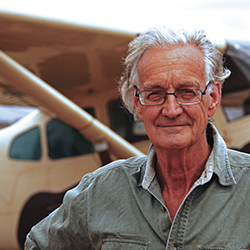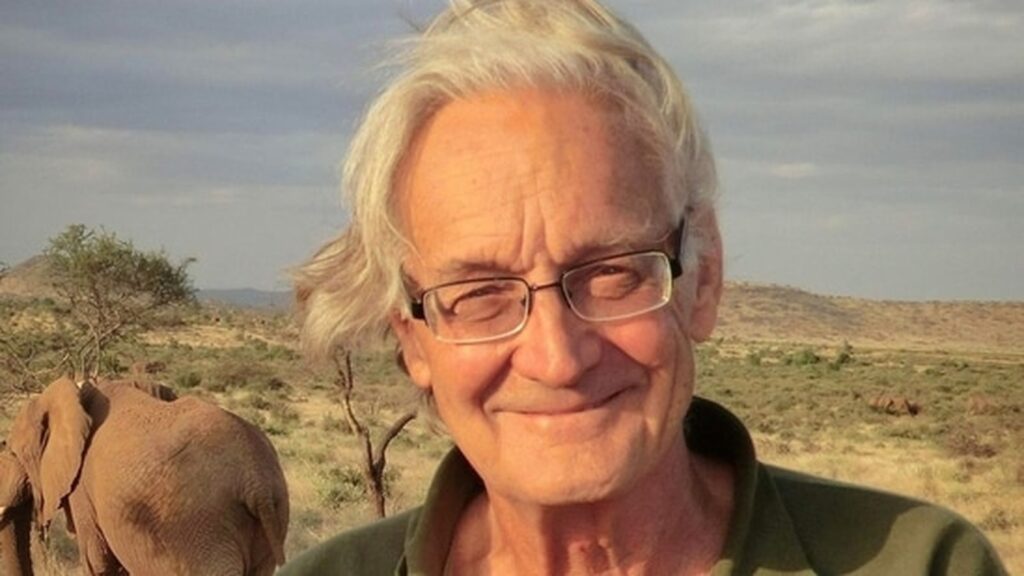
Early Life & What Sparked His Passion
Iain Douglas-Hamilton was born on 16 August 1942 in Dorset, UK. Wikipedia+1
He was educated at Gordonstoun School in Scotland (between 1955 and 1960), and went on to study zoology at University of Oxford, earning a bachelor’s degree in 1965 and later a D.Phil. in 1972. Wikipedia+1
From a young age, Douglas-Hamilton dreamed of returning to Africa, drawn by a love of nature and a desire to understand and protect its wildlife. legendsandlegaciesofafrica.org+1
His early academic training laid the groundwork for what would become a lifetime devoted to studying — and defending — one of Earth’s most majestic and vulnerable creatures.
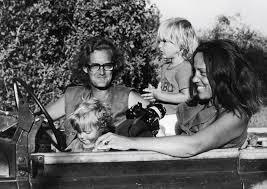
Pioneering Elephant Research: Understanding Their Lives
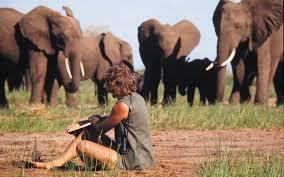
In the mid-1960s, Douglas-Hamilton embarked on what would become a landmark scientific journey: he began the first in-depth, systematic study of wild elephants’ social behaviour in Lake Manyara National Park, Tanzania. Wikipedia+2The Guardian+2
- By observing wild herds, he recognized for the first time how elephants interact socially: their bonds, family structures, personalities, instincts, emotional range. Save the Elephants+1
- He identified individual elephants — by their tusks and ears — gave some names, documented relationships, and captured the profound intelligence, empathy and complexity of elephant societies. The Times+2africanelephantjournal.com+2
- His research challenged existing assumptions about elephants as “mindless beasts,” showing them instead as emotionally rich, socially bonded beings — worthy of respect, empathy and protection. Save the Elephants+1
This work was later published in the bestselling book Among the Elephants (1975), co-authored with his wife Oria Douglas-Hamilton. The book brought elephants — individual, social, vulnerable — to a wide audience, helping humanize them in the public consciousness. Save the Elephants+2douglashistory.co.uk+2
Because of that early work, modern science and conservation understand elephants not just as biomass or numbers — but as individuals with lives, communities, relationships. That perspective became foundational to how we protect them.
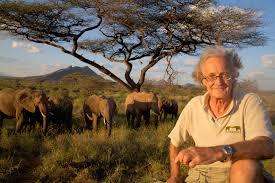
From Researcher to Protector: Spotlight on an Ivory Crisis
In the 1970s and 1980s, as global demand for ivory surged, elephant populations in Africa came under catastrophic pressure. Poaching escalated dramatically. Douglas-Hamilton, with rigorous field data and aerial surveys, was among the first to sound a clear alarm. douglashistory.co.uk+2The Washington Post+2
He pioneered aerial survey methods: using low-flying aircraft to count elephant families over vast landscapes — enabling the first continent-wide population estimates and giving conservationists real data on how many elephants remained. douglashistory.co.uk+2legendsandlegaciesofafrica.org+2
Between 1976 and 1979, under a joint programme of International Union for Conservation of Nature (IUCN) and World Wide Fund for Nature (WWF), Douglas-Hamilton surveyed elephant populations across 34 African countries — producing a comprehensive scientific baseline that exposed the scale and urgency of the threat. douglashistory.co.uk+2The Great Elephant Migration+2
His research revealed that the continental elephant population — then around 1.3 million — had fallen by more than half within a decade. This “elephant holocaust,” as it came to be known, shocked the world and galvanized conservation efforts. douglashistory.co.uk+2The Washington Post+2
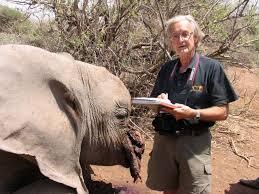
Using that compelling data, Douglas-Hamilton and fellow conservationists successfully campaigned for a worldwide ban on commercial ivory trade — a milestone achieved under the Convention on International Trade in Endangered Species of Wild Fauna and Flora (CITES) in 1989. Wikipedia+2Save the Elephants+2
He also served as honorary chief park warden and anti-poaching advisor in Uganda during the early 1980s, organizing air and ground patrols, sometimes under fire, to stem poaching in war-torn regions — at great personal risk. douglashistory.co.uk+1
At the core of his work lay a stark message: elephants are not infinite resources to be harvested — they are sentient beings deserving protection and respect. His research and advocacy helped shift global perception, policy and action.
Founding of Save the Elephants and Innovation in Conservation
In 1993, Douglas-Hamilton founded Save the Elephants (STE), based in Kenya’s Samburu National Reserve, a specialized organisation dedicated entirely to elephant protection. Save the Elephants+2The Great Elephant Migration+2
Under his leadership, STE became a global model for elephant conservation — combining long-term ecological research, advocacy, community education, and practical protection measures. Save the Elephants+2africanelephantjournal.com+2
One of his most groundbreaking contributions was introducing satellite-based GPS tracking of elephants. Collared elephants, tracked via radio and satellite, offered new insights into their migratory paths, behaviour, and habitat use — data used to design “corridors” that reduce human-elephant conflict, protect critical habitat, and guide ranger deployments. The Great Elephant Migration+2Save the Elephants+2
He also helped bring technology and modern conservation methods to Africa — a fusion of science, compassion and practicality which has now become a standard in wildlife conservation. The Great Elephant Migration+1
Beyond fieldwork, STE under Douglas-Hamilton helped elevate the plight of elephants onto the world stage — influencing policy, raising awareness, funding anti-poaching initiatives, and inspiring countless conservationists across continents. The Star+2africanelephantjournal.com+2
Advocacy, Education & Global Influence
Douglas-Hamilton was not just a field scientist; he was a passionate communicator, teacher and advocate. His writings — including his second major book with Oria, Battle for the Elephants (1992) — made the crisis real to global audiences. Save the Elephants+2The New Indian Express+2
He also advised governments, environmental organisations and international bodies on wildlife policy. He was a long-time member of the specialist groups under IUCN, part of technical advisory teams for anti-poaching monitoring, and served as a consultant to institutions including the European Union and wildlife agencies. Save the Elephants+2douglashistory.co.uk+2
In 2012, he even spoke before the U.S. Senate’s Foreign Relations Committee, urging global action to end elephant poaching and ivory trafficking — helping to shape international responses and policy shifts. Save the Elephants+2Citizen Digital+2
Even when elephant populations suffered new waves of decline in the 2000s and 2010s due to renewed poaching and demand, Douglas-Hamilton remained tireless — mobilizing efforts, supporting new fundraising and awareness campaigns, and helping establish funds to combat the crisis. SWARA Magazine+2africanelephantjournal.com+2
Through all of this, he believed deeply that protecting elephants was not just about saving animals — it was about preserving integrity, compassion, biodiversity, and the future of Earth’s wild places.
Recognition, Awards & Legacy
Over the course of his decades-long career, Douglas-Hamilton received many of conservation’s highest honours:
- The Order of the Golden Ark (1988) Wikipedia+1
- The Order of the British Empire (OBE) in 1992, later elevated to Commander of the British Empire (CBE) in 2015. Wikipedia+1
- The Indianapolis Prize (2010) — widely regarded as the world’s leading award for animal conservation. news.nationalgeographic.org+2Save the Elephants+2
- In 2025, jointly awarded the Esmond B. Martin Royal Geographical Society Prize for outstanding contribution to wildlife conservation and geographical research. SWARA Magazine+1
But perhaps more meaningful than awards are the living legacies he leaves behind: the organisation he founded (Save the Elephants), the generations of conservationists he mentored, the communities empowered to coexist with wildlife, the policies changed, and — above all — the elephants still roaming free because of his work.
Why He Matters — And What His Passing Leaves Behind
Iain Douglas-Hamilton showed the world that elephants are not just numbers or “game.” They are complex social beings — individuals with memories, families, emotions. Through his lifelong dedication, he changed the way science, policy, media and public view elephants.
He helped turn the tide against one of the greatest wildlife tragedies of the 20th century — the ivory-driven “elephant holocaust.” He built institutions and systems to defend elephants not just from poachers but from indifference and ignorance.
But his work was not just about preventing death — it was about ensuring life. By pioneering GPS tracking, habitat corridors, human-elephant coexistence strategies, long-term monitoring and global advocacy, he laid foundations for future conservation long after he is gone.
His passing leaves a huge void: in science, in advocacy, in spirit. Yet, the structures he built — organisations, methods, networks — remain. The mission continues, led by those he inspired.
As many who worked with him have said: he was not just a scientist, not just a protector, but a symbol — a moral compass for humanity’s relationship with nature.
In Tribute: What We Can Honour Today
- We remember his courage — of living among elephants, flying over remote wilderness, facing danger, speaking truth to power.
- We celebrate his dedication — nearly 60 years of constant commitment, evolving methods, unchanging love for elephants.
- We acknowledge his vision — of a world where humans and elephants share landscapes, where wildlife is valued for its being, not just its utility.
- And we commit ourselves — to continue the work he began: protecting elephants, preserving their habitats, educating future generations, and carrying forward the compassion and respect he embodied.
In a world often bent on destruction, Iain Douglas-Hamilton stood for empathy, for science, for coexistence. His life proves that one person, guided by love and conviction, can change the fate of an entire species.
May his memory continue to inspire every trunk that trumpets, every herd that walks free — and every human who hears them, and chooses to protect.